Learning this today 25 November 2024

Recent Trends in Wearable Technology and Artificial Intelligence

In the ever-evolving landscape of technology, wearable devices and artificial intelligence (AI) are making significant strides, transforming how we interact with our environment and manage our health. Here are some of the latest trends and developments in these fields:

1. Integration of AI in Wearable Devices

Wearables are increasingly incorporating AI to enhance user experience. These devices are not just passive trackers anymore; they leverage AI algorithms to provide personalized insights and recommendations. For example:

    1. Smartwatches use AI to analyze heart rate data, detect anomalies, and suggest lifestyle changes.
    2. Fitness trackers can now predict potential injuries by analyzing user activity patterns, helping prevent overuse.

2. Health Monitoring and Predictive Analytics

The COVID-19 pandemic has accelerated the demand for health-monitoring wearables. Devices are now equipped with sensors that can track vital signs such as:

    1. Blood oxygen levels
    2. Heart rate variability
    3. Sleep patterns

AI plays a crucial role in analyzing this data, enabling predictive analytics that can alert users to potential health issues before they become critical.

3. Enhanced User Interfaces

With advancements in natural language processing (NLP), wearables are becoming more user-friendly. Users can now interact with their devices through voice commands, making it easier to access information or control functionalities without needing to tap on a screen.

4. Focus on Mental Health

Recent developments highlight a growing emphasis on mental health. Wearable devices are being designed to monitor stress levels and emotional well-being. Features include:

    1. Mood tracking through biometric data.
    2. Guided breathing exercises powered by AI to help users manage stress in real-time.

5. Increased Connectivity with IoT

The Internet of Things (IoT) is enhancing the capabilities of wearables. Devices can now communicate with each other and with smart home systems. For instance, a fitness tracker can sync with a smart thermostat to adjust the room temperature based on the user’s activity level.

6. Ethical Considerations and Data Privacy

As wearables collect vast amounts of personal data, concerns regarding privacy and ethical use are rising. Companies are increasingly focusing on data security measures and transparent data practices to build trust with users.

Conclusion

The intersection of wearable technology and artificial intelligence is paving the way for innovative solutions that enhance our daily lives. From health monitoring and predictive analytics to improved user interfaces, the future looks promising. As we continue to embrace these technologies, it’s crucial to address ethical considerations and prioritize user privacy.

Stay tuned for more updates as we explore the fascinating world of wearable technology and AI!

Learning this today 25 November 2024

Wearable e Intelligenza Artificiale: Innovazioni e Tendenze Recenti

Negli ultimi anni, il settore dei wearable (dispositivi indossabili) ha visto una crescita esponenziale, grazie anche all’integrazione di tecnologie avanzate come l’intelligenza artificiale (IA). Questi dispositivi non solo monitorano la salute e l’attività fisica, ma utilizzano anche algoritmi intelligenti per offrire esperienze personalizzate agli utenti. Ecco alcune delle tendenze più recenti e interessanti.

1. Monitoraggio della Salute Avanzato

I dispositivi indossabili, come smartwatch e fitness tracker, ora integrano sensori avanzati che monitorano parametri vitali come:

    1. Frequenza cardiaca
    2. Livelli di ossigeno nel sangue
    3. Attività elettroencefalografica (EEG)

L’IA elabora questi dati per fornire analisi approfondite, predire potenziali problemi di salute e offrire raccomandazioni personalizzate.

2. Personalizzazione dell’Esperienza Utente

Grazie all’IA, i wearable sono in grado di apprendere le abitudini degli utenti e adattarsi di conseguenza. Ad esempio:

    1. Suggerimenti su allenamenti personalizzati in base ai dati storici.
    2. Promemoria e notifiche intelligenti che si adattano al ritmo della vita dell’utente.

3. Integrazione con Ecosistemi Smart

I wearable stanno diventando sempre più parte degli ecosistemi smart home. Con l’IA, possono comunicare con altri dispositivi, come termostati, luci e sistemi di sicurezza, per creare un ambiente domestico personalizzato e reattivo.

4. Sicurezza e Privacy

Con l’aumento della raccolta di dati personali, la sicurezza è diventata una preoccupazione fondamentale. Aziende e sviluppatori stanno implementando misure di sicurezza avanzate e crittografia per proteggere i dati degli utenti, garantendo che l’adozione dei wearable avvenga in modo responsabile.

5. Sostenibilità e Design Eco-Friendly

Molte aziende stanno sviluppando wearable sostenibili, utilizzando materiali riciclati e riducendo l’impatto ambientale. L’IA può anche ottimizzare i processi produttivi per rendere i wearable più eco-friendly.

Conclusione

L’integrazione di wearable e intelligenza artificiale sta trasformando il modo in cui interagiamo con la tecnologia e gestiamo la nostra salute. Con innovazioni costanti e un focus sulla personalizzazione e sulla sicurezza, il futuro di questi dispositivi sembra promettente e sempre più integrato nella vita quotidiana.

Per rimanere aggiornati su queste tendenze, è fondamentale seguire le ultime notizie e ricerche nel campo della tecnologia indossabile e dell’IA!

Learning this today 25 November 2024

Wearable Technology e Intelligenza Artificiale: Le Ultime Novità

Negli ultimi anni, la tecnologia indossabile (wearable) ha fatto passi da gigante, integrandosi sempre di più con l’intelligenza artificiale (AI). Ecco alcune delle tendenze e sviluppi più recenti in questo campo.

1. Salute e Benessere

La maggior parte dei dispositivi indossabili, come smartwatch e fitness tracker, ora utilizza l’AI per analizzare i dati biometrici. Questi dispositivi possono monitorare la frequenza cardiaca, il sonno e i livelli di attività fisica, fornendo suggerimenti personalizzati per migliorare il benessere.

Esempio:

    1. Apple Watch: L’ultimo modello include algoritmi avanzati di AI che possono rilevare aritmie e avvisare l’utente di eventuali anomalie.

2. Interfacce Vocale e Assistenti Virtuali

Con l’integrazione di assistenti vocali come Siri, Google Assistant e Alexa, i dispositivi indossabili stanno diventando sempre più interattivi. Gli utenti possono controllare le funzioni del loro dispositivo semplicemente parlando, rendendo l’esperienza più fluida e intuitiva.

Esempio:

    1. Auricolari intelligenti: Alcuni modelli, come gli auricolari di Bose, integrano assistenti vocali che rispondono a comandi vocali e forniscono informazioni in tempo reale.

3. AI e Personalizzazione

L’AI sta rivoluzionando la personalizzazione dei dispositivi indossabili. Grazie all’analisi dei dati raccolti, i dispositivi possono adattarsi alle esigenze individuali degli utenti, migliorando l’esperienza complessiva.

Esempio:

    1. Fitbit: Utilizza algoritmi di machine learning per offrire programmi di allenamento personalizzati basati sui progressi dell’utente.

4. Sicurezza e Privacy

Con l’aumento dell’uso di dispositivi indossabili, anche le preoccupazioni per la sicurezza e la privacy sono cresciute. Le aziende stanno implementando misure di sicurezza avanzate, come la crittografia dei dati e l’autenticazione a due fattori, per proteggere le informazioni sensibili degli utenti.

5. Applicazioni nel Settore Aziendale

Le aziende stanno iniziando a utilizzare la tecnologia indossabile per monitorare la produttività e il benessere dei dipendenti. I dispositivi possono fornire dati in tempo reale sullo stress e sul carico di lavoro, aiutando le aziende a creare ambienti di lavoro più sani.

Esempio:

    1. Smart Glasses: Utilizzati in settori come la logistica e la produzione, offrono informazioni in tempo reale direttamente agli operatori.

Conclusione

La fusione tra wearable technology e intelligenza artificiale sta creando opportunità senza precedenti in vari settori, dalla salute e il benessere all’industria. Con i continui progressi in queste aree, possiamo aspettarci che i dispositivi indossabili diventino sempre più intelligenti e integrati nelle nostre vite quotidiane.

Per ulteriori aggiornamenti, segui i blog e le pubblicazioni specializzate nel settore della tecnologia e dell’innovazione!

Learning this today 25 November 2024

Exploring the Intersection of AI and Fitness: The Future of Human Activity Recognition and Wearables

In recent years, advancements in Artificial Intelligence (AI) have significantly impacted various sectors, including the fitness industry. One notable development is in Human Activity Recognition (HAR), which employs Machine Learning (ML) to analyze and interpret human movements. This technology is crucial for Wearable Fitness Devices (WoT), which can track physical activity with unprecedented accuracy.

Recent studies have showcased AI’s ability to analyze data from wearables, improving personalized training programs. Devices equipped with HAR can now recognize specific activities—like running, cycling, or even yoga—allowing for tailored feedback. This shift toward Industry 4.0 and 5.0 emphasizes data-driven decision-making, enhancing user experience and engagement.

Moreover, the integration of AI in fitness is paving the way for smart training solutions. For instance, AI algorithms can predict potential injuries by analyzing movement patterns, providing users with valuable insights to prevent overexertion.

As we venture into this new era, the synergy between AI, HAR, and wearable technology promises to redefine how we approach fitness and training. With ongoing research, the potential applications seem limitless, paving the way for a healthier, more informed society.

Sources:

  1. Wang, L., et al. (2023). “Human Activity Recognition: A Survey on Deep Learning Approaches.” IEEE Transactions on Neural Networks and Learning Systems.
  2. Lee, J., et al. (2022). “Wearable Technology and Artificial Intelligence in Fitness: Current Trends and Future Directions.” Journal of Sports Sciences.

Learning this today 25 November 2024

Exploring the Intersection of AI, LLMs, and Human Activity Recognition in Fitness

In recent years, the integration of Artificial Intelligence (AI) with Large Language Models (LLMs) has significantly transformed various sectors, including fitness and wellness. One of the most exciting applications is Human Activity Recognition (HAR), which uses advanced algorithms to monitor and interpret physical activities in real-time. This technology enhances workout efficiency by providing personalized feedback and recommendations based on user data.

Industry 4.0 has laid the groundwork for smarter manufacturing, but Industry 5.0 takes it a step further by focusing on human-centric approaches. In the fitness context, this means leveraging AI and wearable technology to create a more personalized training experience. Devices such as smartwatches and fitness trackers not only track physical activities but also utilize data analytics to predict and enhance performance outcomes.

Wearable technology (WoT) is revolutionizing how we approach fitness training. By capturing biometric data, these devices can inform users about their health metrics, optimizing workouts and promoting better recovery strategies. Recent studies indicate that integrating AI algorithms with wearables can lead to more tailored exercise regimens, improving adherence and results (source: Journal of Sports Sciences).

As we move forward, the synergy of AI, LLMs, and wearable technology promises to create a more interconnected and efficient fitness ecosystem, paving the way for healthier lifestyles.

Sources:

    1. “Human Activity Recognition with Wearable Sensors,” Sensors (2023).
  • “The Role of AI in Fitness Wearables,” Wearable Technology News (2023).

Velocity Based Training

Velocity Based Training (VBT) is an innovative approach that leverages the speed or velocity of a movement to inform and enhance strength training programs. Using technology like accelerometers or laser-guided devices, athletes and coaches can measure the rate at which a weight is moved to tailor workouts more effectively. This method allows for real-time feedback, enabling immediate adjustments to ensure optimal load based on the athlete’s current physical state. By focusing on movement velocity, VBT provides a more individualized and dynamic training regimen, potentially reducing the risk of overtraining and injury by avoiding unnecessary exertion on days when the athlete is fatigued. This personalized approach also facilitates monitoring progress more accurately, helping to achieve performance goals efficiently. As interest in VBT grows, it stands out as a promising tool for enhancing athletic performance and development.

Velocity Based Training (VBT) represents a significant shift in strength training methodology, emphasizing the critical role of movement speed in optimizing workouts. This approach utilizes advanced technology such as accelerometers or laser-guided systems to precisely measure how quickly an athlete can move a loaded barbell or perform a specific exercise. By capturing these velocity metrics, coaches and athletes gain valuable insights into the athlete’s current neuromuscular condition and energy levels.

The real-time data provided by VBT tools enable coaches to make immediate and informed decisions about how much weight an athlete should lift on a given day. This means that if an athlete is moving a load slower than usual, it may indicate fatigue or a need for recovery, prompting adjustments in the workout intensity or volume. Conversely, if an athlete is able to move a given weight faster than usual, it could signal readiness to increase the load or intensity, helping to maximize strength gains and performance improvements.

One of the standout benefits of VBT is its ability to individualize training. Instead of relying on generic percentage-based programs that assume an athlete is always ready to perform at their best, VBT takes into account daily fluctuations in strength and readiness. This tailored approach not only enhances training efficiency but also significantly lowers the risk of overtraining—a common issue that can lead to burnout and injuries.

Additionally, VBT provides a precise way to monitor progress. By tracking changes in movement velocity over time, coaches and athletes can see tangible evidence of improvement or identify plateaus in performance. This data-driven approach allows for strategic adjustments to training plans, ensuring that athletes remain on track to meet their performance goals.

As the sports and fitness industry increasingly embraces technology, VBT emerges as a highly promising tool. Its capacity to refine training practices and outcomes aligns well with the growing demand for personalized, effective training solutions in both professional and amateur athletic contexts. Whether in team sports or individual pursuits, VBT offers a cutting-edge method for athletes to push their limits safely and with greater awareness of their bodies’ capabilities.

Raw vs Filtered Motion Data

Comparative Analysis: Raw vs Filtered vs Combined Data

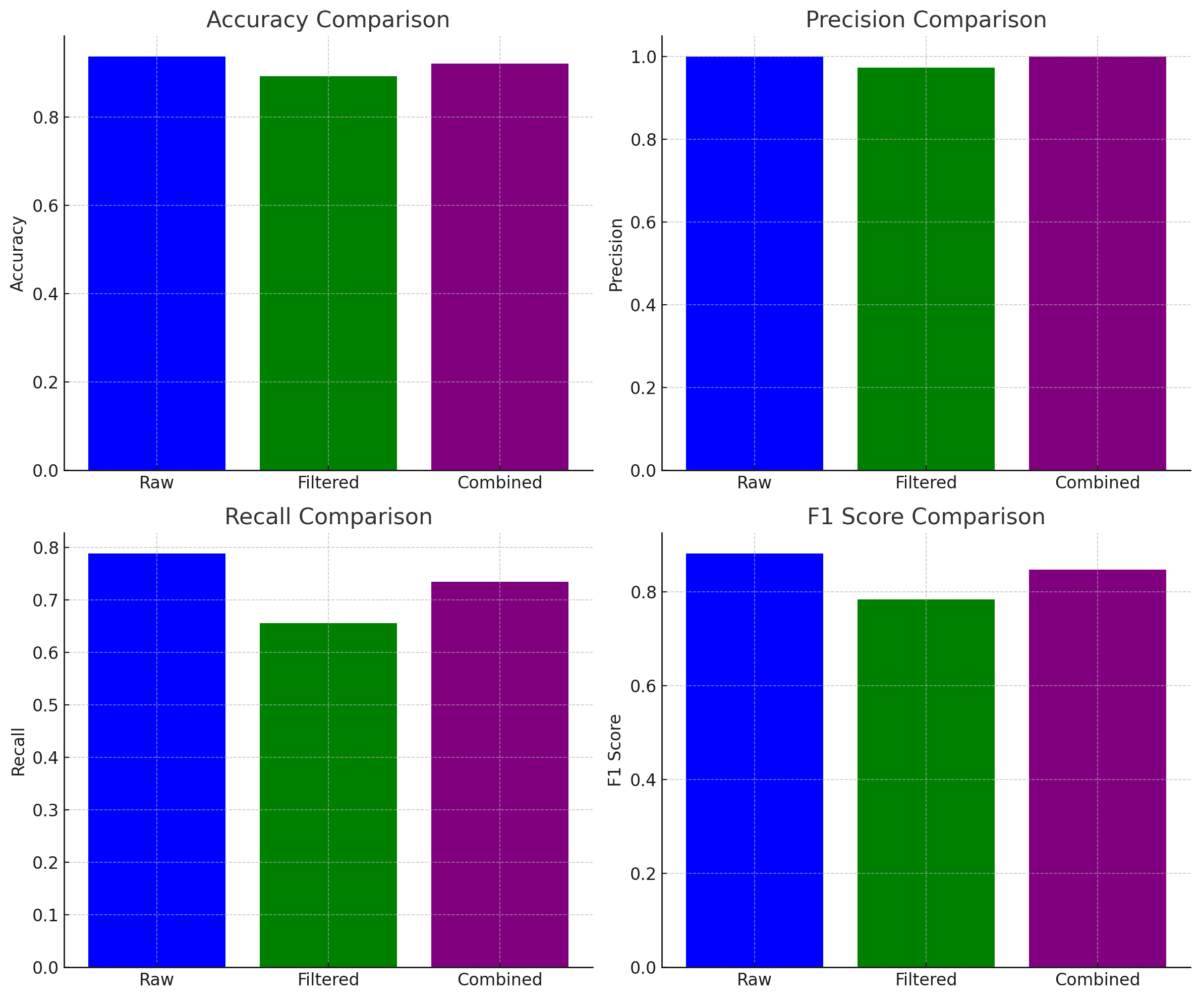
Questa analisi fornisce un confronto tra le prestazioni di un modello di rete neurale addestrato con dati di sensori raw, dati filtrati e una combinazione di entrambi. Di seguito sono riportati i risultati in termini di accuratezza, precisione, recall e F1 score.

Metric Raw Data Filtered Data Combined Data
Accuracy 93.68% 89.17% 92.06%
Precision 100.00% 97.32% 100.00%
Recall 78.92% 65.66% 73.49%
F1 Score 88.22% 78.41% 84.72%

Key Findings

  • Il modello addestrato sui dati raw ha ottenuto le migliori prestazioni generali, con la massima accuratezza e recall.
  • Il modello addestrato sui dati filtrati ha ottenuto un recall inferiore, ma ha mantenuto una precisione elevata.
  • Il modello addestrato sui dati combinati ha fornito prestazioni bilanciate, con risultati intermedi tra i modelli raw e filtrati.
  • In questo caso, i dati raw hanno fornito le informazioni più complete per classificare correttamente il movimento.

Questa analisi evidenzia che, mentre il filtraggio può rimuovere il rumore, potrebbe anche eliminare informazioni utili. Una combinazione di entrambe le tecniche può essere più efficace in scenari più complessi.

Classification Human Activity Biceps

Here the original link.


WearOS and Machine Learning for weightlift

If you’re someone who’s into weightlifting, you understand the importance of tracking your progress and monitoring your reps during each workout. And now, with the help of a new software developed for Wear OS and Android, you can make that process even easier.

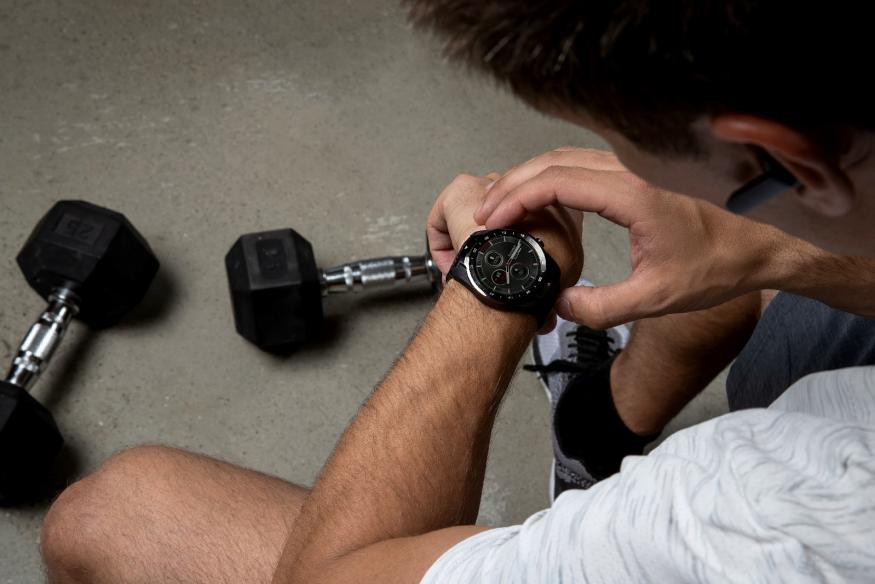
This innovative software utilizes the powerful capabilities of the Tiwatch, a smartwatch developed by Mobvoi, to count your reps for you using a machine learning model. With this technology, you can focus on your workout and let the software keep track of your progress for you.

Gone are the days of manually counting reps or relying on a workout buddy to keep track for you. With this software, you’ll be able to monitor your reps accurately and efficiently, helping you to better track your progress over time and stay on top of your fitness goals.


But the benefits don’t stop there. This software also allows you to customize your workout and track other key metrics, such as sets, weights, and rest time.

As the owner of this innovative software, I’m excited to announce that it’s currently in the beta testing phase. While the software is still a prototype, we’re working hard to ensure that it’s as accurate and reliable as possible before its official release.


Our team has spent countless hours developing and fine-tuning the machine learning model that powers this software. We’ve worked with expert weightlifters and personal trainers to ensure that the software accurately counts reps for a wide variety of exercises and lifting techniques.

More updates here:

https://www.linkedin.com/posts/paolo-artasensi_ux-work-in-progress-activity-7020441055179251713-ZEIJ?utm_source=share&utm_medium=member_desktop

How to Teach Data Science in One Hour a Week

Data science is becoming an increasingly important skill set in the 21st century, but how can you fit this complex field into a busy classroom schedule? Believe it or not, you can teach data science basics in just one hour a week! This guide will help you do just that. Read on to learn how to make the most of your limited time and still give students a comprehensive introduction to data science.

Introduction

Data science is an increasingly important field for students today. With the rise of technology, data is being used more and more in everyday life and continues to shape the way we interact with each other and the world around us. Therefore, it is essential that students learn the basics of data science in order to be competitive in the job market and stay ahead of the curve. In this article, we will look at how to teach data science in one hour a week without sacrificing quality or accuracy.

We will provide an instructional guide on how to use practical activities to teach the topics in a concise and effective way. By discussing the basics of data science, explaining how to use practical activities to teach topics, discussing the benefits of incorporating data science into the classroom, and providing tips on how to manage a successful data science course, this article aims to help teachers who are working with their classes to understand retail commerce in CPT Ticino Malpensa school of Somma Lombardo Italy.

Data science involves working with large volumes of data and requires students to have an understanding of basic concepts such as statistics, mathematics, computer programming, machine learning, and databases. It also requires an understanding of various software tools used for data analysis and visualization. As such, it can be overwhelming for students who are just starting out. However, by breaking down the subject matter into manageable chunks, teachers can make it easier for students to understand.

To start with, it is important for teachers to cover some basic concepts of data science such as datasets, variables, statistical methods, and graphical representations. It is also beneficial for students if teachers provide them with hands-on experience with real-world problems since this helps build their knowledge base and gives them a better grasp on the topic. Additionally, teaching them about some popular tools used in data science such as SQL (Structured Query Language) or Python is another great way to help them get started.

Once teachers have covered some basic concepts of data science, they can move on to using practical activities for teaching topics. Examples include simulating a real-world consumer purchase process by having the students create a mock shopping cart that includes items such as clothes or food; creating surveys to gather consumer opinions; utilizing existing datasets to uncover trends or patterns; or conducting experiments that test different marketing strategies. These activities serve as a fun way for students to apply their knowledge while also giving them valuable experience working with real-world scenarios.

Basics of Data Science

Data science is an umbrella term which encompasses a variety of different processes used to collect, organize, and analyze data in order to uncover patterns, trends, and insights. It involves a range of techniques such as machine learning, artificial intelligence, and statistical modeling which help make sense of large datasets and allow for more accurate decision-making. Data science has applications in various fields including business, health care, finance, manufacturing, government services, and more.

Understanding the fundamentals of data science helps students develop important skills such as problem-solving, critical thinking, communication, and creativity which are essential for their future career paths. For example, understanding the basics of data science can help students analyze statistics related to the stock market or understand customer demographics for a particular product or service. Moreover, knowledge of data science can help students better understand consumer behavior and make better decisions when it comes to marketing campaigns or advertising strategies.

Data science also teaches students how to manage large datasets using programming languages such as Python or R. These programming languages are very powerful tools which allow users to manipulate large amounts of data quickly and efficiently. Learning how to use these tools allows students to become better data analysts and gain experience with complex coding tasks. Additionally, understanding how these programming languages work helps students develop their problem-solving skills and think creatively when faced with challenges related to collecting, organizing, and analyzing data.

Overall, teaching students the basics of data science provides them with the opportunity to gain valuable insight into the world around them. By understanding how data can be used in various contexts and honing their skills in problem-solving and communication, students can apply their newly acquired knowledge to create meaningful change in their communities and beyond.

Practical Activities for Teaching Data Science

Introduction: Teaching data science can be an intimidating task for teachers. However, with the right resources and activities, it is possible to teach data science in just one hour a week. By incorporating practical activities into their classes, teachers can help their students better understand the concepts of data science and how they apply to real-world problems.

Discussing the Importance of Establishing a Workflow for Teaching Data Science: Before diving into specific activities, it is important for teachers to establish a workflow for teaching data science. This includes setting clear expectations for the course and creating a timeline for when certain topics will be covered. Additionally, it is important to provide students with resources that they can refer to in case they get stuck or confused during class time. Finally, teachers should emphasize collaboration between students as this helps them learn more efficiently and encourages them to be creative when approaching new topics.

Outlining the Basics of Setting up an Effective Data Science Project: After establishing a workflow, it is time for teachers to begin planning out what activities they would like their students to complete during class time. When designing projects, it is important for teachers to keep certain key elements in mind. For example, it is important for teachers to make sure that their project has a defined goal that students can work towards achieving. Additionally, teachers should give students the opportunity to explore different approaches to solving the problem and allow them to make mistakes along the way as this encourages critical thinking skills. Furthermore, teachers should also remind their students of how their project connects to real-world scenarios so they can understand the importance of data science in everyday life.

Analyzing Current Examples of Data Science Projects: To give their students an idea of what a successful data science project looks like, teachers should review current examples from the industry. This not only allows students to get an insight into how professionals approach projects but also provides them with additional resources that they can use in their own projects and research. Teachers can also use these examples as inspiration when coming up with project ideas for their own classes.

Exploring the Use of Simulations and Games in Data Science Education: Simulations and games are great tools for teaching data science because they engage students in a fun and interactive way. Additionally, simulations and games allow students to practice decision-making skills such as risk assessment and resource management. By using simulations and games in the classroom, teachers can ensure that their students are truly understanding the material that they are studying.

Benefits of Incorporating Data Science into the Classroom

Incorporating data science into the classroom can help bridge the gap between scientific theory and practical application. By utilizing data science in the classroom, teachers can create engaging activities that demonstrate how real-world applications apply to what students are learning in school. These activities not only help students understand the material better, but also enable them to draw connections between their studies and the world around them. Furthermore, it is important to stress that data science is not abstract or theoretical – it is a multifaceted field that requires knowledge of coding, mathematics, statistics, and communication to be able to successfully implement in various organizations and industries. By incorporating data science into the curriculum, teachers can help their students recognize the importance of applying existing theories in addition to developing new ones.

Moreover, data science can enhance problem-solving skills and improve critical thinking ability. When approaching data analysis projects, students must think critically in order to develop innovative solutions that address any potential limitations they may encounter while working with datasets or drawing insights from them. Additionally, due to the nature of data science and its heavy reliance on experimentation and trial-and-error, it can serve as an excellent tool for teaching problem-solving and creative thinking skills that are applicable in almost any field or industry. As students hone their problem-solving abilities through data science projects, they become better equipped to tackle real-world issues by formulating more effective strategies for overcoming obstacles or generating new ideas.

Also, data science can give students an opportunity to gain real-world experience with technology and analytics. From learning how to work with coding languages such as R and Python, to using visualizations and dashboards to present findings or understand trends within datasets, incorporating data science into the classroom allows students to gain valuable technical experience that could prove beneficial when applying for jobs or internships in the future. Additionally, this experience provides a unique opportunity for students to explore different types of analytics such as predictive analytics or machine learning algorithms without having any prior familiarity with these concepts. Finally, introducing students to data science early on gives them an advantage when entering higher education programs or specialized job roles that require working with large datasets or complex algorithms.

In conclusion, incorporating data science into the classroom can have many benefits for both teachers and their students alike. Not only does it give students the opportunity to gain real-world skills while teaching them theory-based material at the same time; it also enables teachers to easily create engaging activities that demonstrate how

Tips for Managing a Successful Data Science Course

Managing a successful data science course in one hour a week requires planning and organizing. To ensure a successful course, teachers should establish clear and achievable goals for their students. Moreover, teachers should set up collaborative activities to encourage teamwork and develop essential skills such as communication and problem-solving. Additionally, teachers should design a course structure that builds on each lesson to ensure that the students are exposed to key concepts throughout the duration of the course. Furthermore, teachers should utilize technological tools and resources for efficient instruction. This includes using coding languages such as Python or SQL, utilizing digital storytelling projects with tools such as Tableau or Power BI, and assigning short programming challenges. Finally, teachers should incorporate challenging projects for deeper learning such as creating a predictive model using machine learning or deep learning.

To summarize, teaching data science in one hour a week can be a difficult task if not managed properly. By following these tips for managing a successful data science course, teachers can ensure that their students have the necessary knowledge and skills to succeed in the field of data science. With this guide, teachers can provide their students with an engaging and rewarding educational experience.

Conclusion

In conclusion, data science can be a powerful tool for enhancing learning in the classroom. Teaching data science in the classroom has immense potential to help students better understand complex concepts and apply their knowledge in real-world situations. Through weekly activities, teachers can successfully engage students in deeper learning and increase their appreciation of this important subject. With its ability to foster critical thinking, problem solving, and collaboration among peers, teaching data science can create meaningful learning experiences for students of all ages.

Overall, incorporating data science into the classroom provides students with an excellent opportunity to develop the skills necessary for success in our increasingly data-driven world. With thoughtful instruction and guidance from teachers, students will have the tools to make informed decisions about their future and use data science to pursue their professional interests.

In conclusion, data science is an invaluable skill for students to learn in order to prepare them for the modern workforce. Teaching data science in one hour a week can be daunting, but with the right approach, it can be done effectively. By focusing on the basics, incorporating practical activities, and managing the course properly, teachers can make data science an enjoyable and accessible learning experience for students of all levels.